
Often a large section of people are angry about fireworks on the occasion of a festival or any event. The issue of pollution is raised. The concern is right to some extent, but when this concern is caused by war, it is completely missing on pollution. The pollution caused by the war between the two countries is not only spoiling the air but also the soil. Even if we take Russia and Ukraine, the smoke from their war exceeds the annual carbon emissions of many countries.
Let’s start with Moscow and Kyiv. Governments often talk about casualties in war, but their damage to the environment is ignored. A lot of information remains confidential, so researchers are not able to gather correct data. They are not even able to go to war affected areas and collect data. Despite this, some work is being done which shows to what extent the pollution caused by war is lethal.
The Initiative on Greenhouse Gas Accounting of War (IGGAW) is a research group supported by the European Climate Foundation as well as Germany and Sweden. It works on pollution caused by wars.
Its report said that the impact of greenhouse gas emissions in the first two years of the Russia-Ukraine war was so large that it was more than the annual emissions of about 175 small and medium-sized countries globally. This means that if the total annual CO₂ emissions of such countries are seen separately, then only the gases produced due to military activities in Russia and Ukraine were much more.
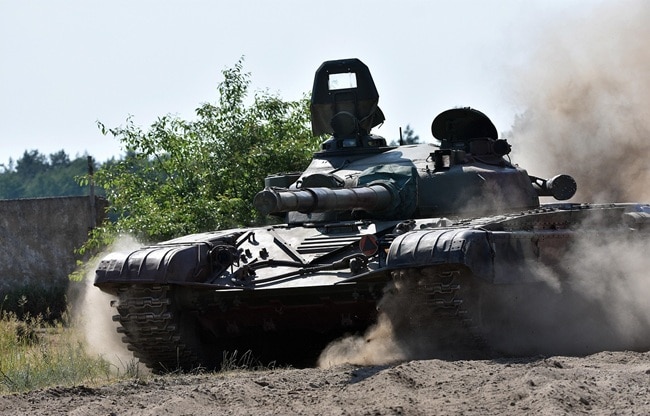
According to the report, about 237 million tons of carbon emissions occurred in the first three years of Russia’s invasion of Ukraine. Many things were involved in this.
– Military activities such as the use of tanks, aircraft, and other military equipment.
Due to the explosion, fires broke out in cities, forests and agricultural lands.
– Smoke emanating from the movement of refugees and displaced people.
Even if 175 small and big countries are excluded, this emission is still equal to the combined annual carbon emissions of Austria, Hungary, Czech Republic and Slovakia. Many other poisonous gases are also released during war, which are further increasing global warming.
Russia deliberately targeted energy infrastructure in the initial period. This led to massive leakage of many types of greenhouse gases. The biggest example was the loss of the Nord Stream-2 pipeline. When this pipeline broke down, methane gas released in large quantities into the sea. This resulted in emissions not just a little, but equivalent to 14 million tonnes of carbon dioxide. Russian attacks on Ukraine’s high-voltage electricity network resulted in the release of sulfur hexafluoride gas, which is extremely poisonous. Its total impact was approximately 10 lakh tonnes.
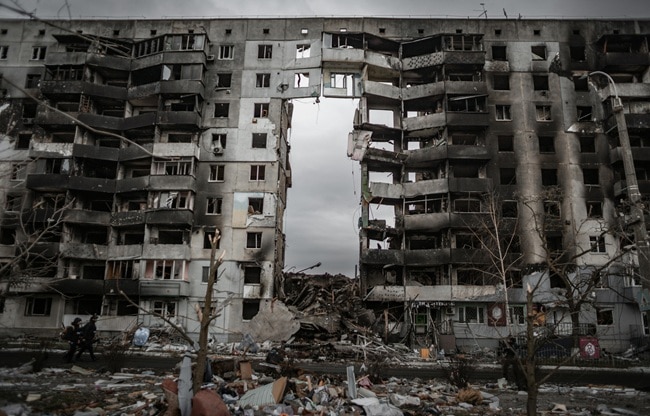
How much pollution was caused by the war between Hamas and Israel?
The war has caused more pollution than even 100 countries do in a whole year. The Guardian made a report quoting SSRN, a think tank working on the environment. According to this, this war caused about 31 million tons of carbon emissions in just the first 15 months. This is more than the combined emissions of both Costa Rica and Estonia for the entire 2023.
War causes more pollution than any single fireworks display. But no one is responsible for this. No country is obliged to submit a report related to this to the United Nations or anywhere else. Military secrecy is the main reason for this. Every country keeps its military’s energy consumption, weapons movement, and fuel use confidential and avoids making the data public.
Apart from this, it is also said in Kyoto Protocol and Paris Agreement that if the countries wish to give data of military emissions, it is not mandatory.
The defense industry of countries like America is quite extensive. If military pollution is looked at, such countries will appear higher in the ranking of global polluters. They may have to pay climate tax, or may be banned. This is the reason why this subject continued to be ignored.
—- End —-
