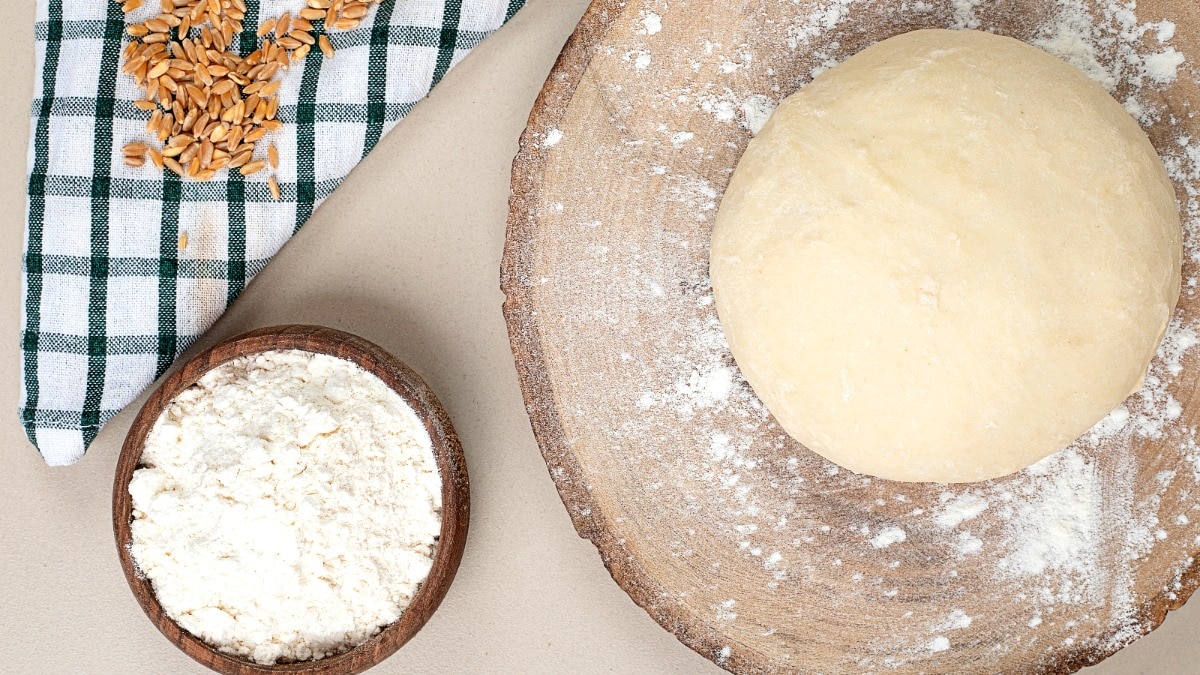
In most Indian homes, roti is made at night, so much of the kneaded dough is left over. Then that flour is kept in the refrigerator and paratha or roti is made from that flour and eaten the next morning. People use that flour without any hesitation, but can there be some disadvantages of using kneaded flour?
What did the dietician say?
Dietician Bhavesh Gupta told in the reel that at home we keep the leftover flour in the refrigerator overnight and use it again the next day. But have you ever wondered whether it is really safe and healthy to eat this leftover flour?
He further said, ‘Flour is rich in moisture and carbohydrates, hence it creates a positive environment for the growth of bacteria and fungus. Especially when it is kept at room temperature.
‘Keeping flour in the refrigerator at a temperature of 4 degrees Celsius slows down the growth of microorganisms significantly. However, some temperature-sensitive nutrients such as vitamin C, folate and polyphenols may be slightly reduced. Overall, from the nutritional point of view, there is not much difference between the flour left over from the night and fresh flour. However, people who work or live alone can keep the flour in an airtight container in the refrigerator overnight.
Is there bacteria in flour?
According to a report in The Week, keeping leftover dough open for a long time or leaving it at room temperature can lead to the growth of dangerous bacteria and mold. Water, moisture and starch are present in flour and these three together create an ideal environment for bacteria. If this flour is kept outside for 8–10 hours, bacteria like E.coli or Salmonella start growing which cause problems like stomach ache, food poisoning and vomiting.
Safe to use leftover flour?
The safety of leftover flour depends on how it was prepared and stored. The shelf life of flour varies depending on its level of processing. Maida, for example, stays fresh longer than wheat flour because it is more processed. The bran is removed from it, leaving only the starchy endosperm. At the same time, bran and germ are present in whole wheat flour which are rich in oil and get spoiled quickly when exposed to light, moisture or air.
How the flour and kneaded dough is being stored is also important in maintaining its quality. According to the United States Department of Agriculture (USDA), flour can be safely stored at room temperature if stored in an airtight container in a cool, dry place. Refrigeration or freezing can further increase its freshness.
How safe is it to keep flour in the fridge?
Most people think that keeping flour in the refrigerator keeps it safe but this is not completely correct. It has been told in the report that if the flour is kept in a clean airtight container and kept in the refrigerator for 8 to 12 hours, then it can be used. But flour older than 24 hours is not edible. The cold temperature of the refrigerator slows down the growth of bacteria but does not stop it completely. Therefore, after 12 hours the taste, color and smell of flour starts changing, which is a sign of its spoilage.
What do doctors say?
Fauzia Ansari, dietitian, Apollo Spectra Hospital, Mumbai, says, ‘If leftover kneaded dough is kept at room temperature for too long, it can become a breeding ground for bacteria and fungus because the excess moisture and starch present in it create an ideal environment for the growth of microorganisms, which can cause it to spoil and lead to diseases.’
‘There is no solid evidence that refrigeration at 4°C keeps dough stored overnight is safer, so instead of keeping kneaded dough overnight and using it the next day, knead and use fresh dough.’
—- End —-
