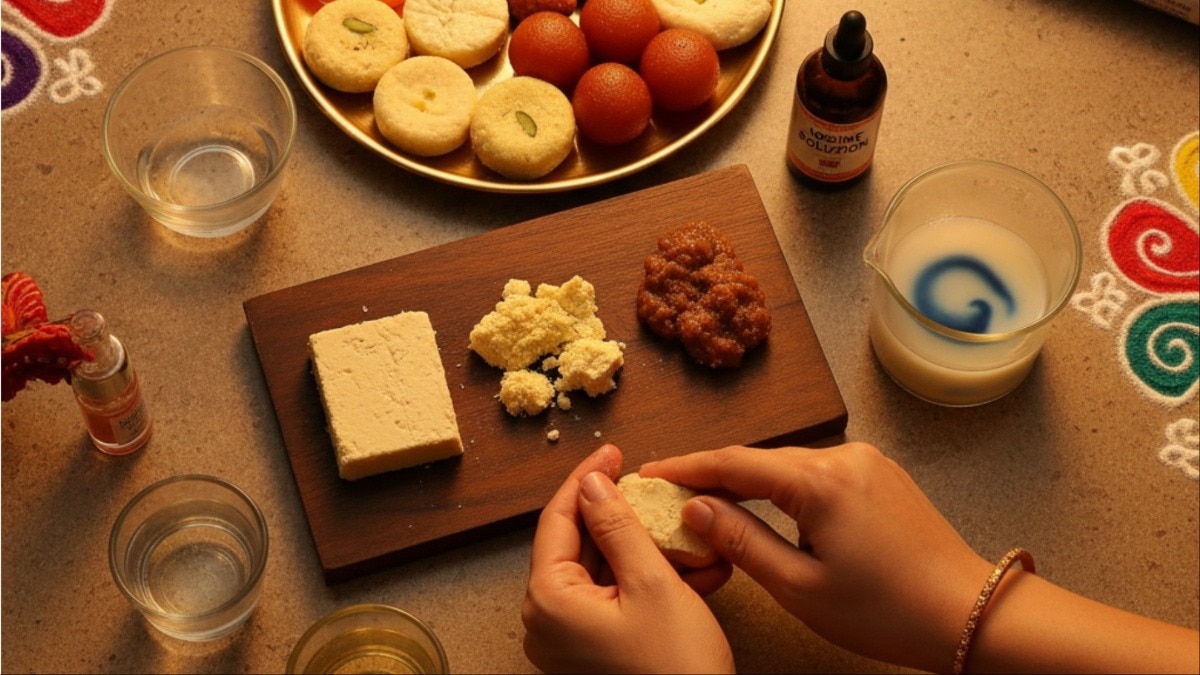
The festival of Diwali brings a lot of happiness and sweetness and the sweets shops in the markets start getting crowded. But meanwhile, the Food Safety Department in Lucknow has recovered more than eight quintals of fake khoya. Sale of fake and adulterated sweets starts in large quantities during the festival season.
The highlight of every home are the sweets made from Khoya (Mawa) like Gulab Jamun and Barfi. But eating sweets made from fake khoya can be dangerous for your health, hence it is very important to identify fake and real khoya. Let us today tell you some such methods by which you will be able to easily identify fake khoya at home.
How is fake khoya made?
First of all, you should know that fake khoya is often made from harmful ingredients like flour, starch, synthetic milk, detergent, and vegetable oil. It is not difficult to identify khoya at home, real khoya is light cream or yellow in color and has a mild milky aroma. Real khoya is slightly grainy and soft when prepared, whereas fake khoya looks very white, smooth or plastic like.
How to identify fake khoya at home?
Rub with hands: When you rub khoya on your palm, if ghee comes out from it and a sweet smell comes out, then understand that it is genuine. If it is fake it will look sticky.
Try making a pill: If after making khoya tablets, it starts breaking or there are cracks in it, then know that it is adulterated khoya because real khoya does not break.
Try heating: Try heating a piece of khoya, if it starts releasing ghee, then understand that it is real. If it releases water then the khoya is fake.
Taste: Real khoya will dissolve as soon as you put it in the mouth and will taste slightly sweet like milk. But at the same time, fake khoya will stick in the mouth.
Iodine Test: Dissolve khoya in hot water and add a few drops of iodine in it. If the color of khoya turns blue, then understand that it contains starch or adulteration.
—- End —-
