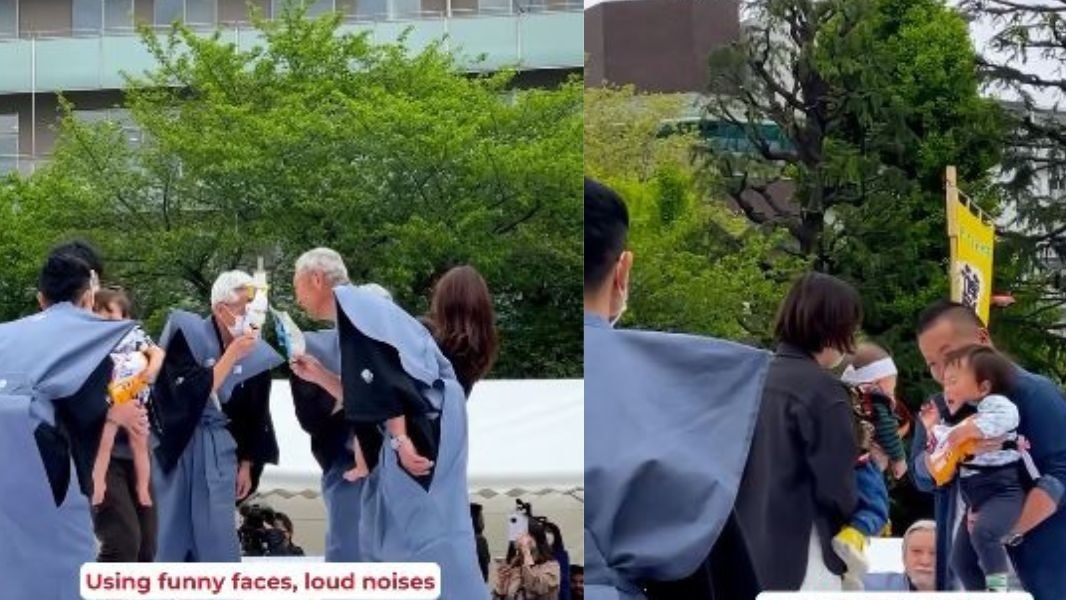
The Naki Sumo Crying Baby Festival (‘Crying Sumo Contest’ or ‘Nakizumo’) is an annual Japanese festival in which babies are placed on the laps of sumo wrestlers in the ring. In this, two children take part in a small competition and the child who cries first wins. According to Japanese belief, a crying baby has the power to ward off evil spirits and is a sign that the child will grow up healthy and strong. People participating in it wear funny and scary masks to scare children.
What is its history?
The Naki Sumo Festival has been celebrated in Japan for more than 400 years. It is believed that the loud crying of children drives away demons and evil spirits. There is a Japanese saying, “Naku ko wa Sodatsu”, which means “children who cry grow up faster”, and this is the inspiration for the festival.
festival tradition
The winning child is lifted high into the air by a sumo wrestler at Sensoji Temple in Asakusa, Tokyo. The festival is celebrated annually at Shinto shrines throughout Japan, often coinciding with Children’s Day at the end of Golden Week. The rituals may be slightly different from place to place, but the main objective is always to pray for the good health of the children and to organize small sumo competitions for them.
Traditions and events of Naki Sumo Festival
Each Naki Sumo Festival begins with a prayer by a Shinto priest for the healthy development of the children. Temple staff prepare hand-crafted four-pointed kabuto helmets for children and souvenirs for parents.
What is the competition process?
The crying competition takes place in a hand-made sumo ring. Two children at a time compete in small matches, and are placed over the laps of professional or student sumo wrestlers. The child who cries first is declared the winner and is blessed with good health. If both babies cry together, the baby who cries louder or longer wins.
sumo wrestler technique
tossing children in one’s lap
make loud noises
making funny or scary faces
“Naki! Naki! Naki!” (Cry! Cry! Cry!) say
If the child does not cry for several minutes, referees wearing traditional masks approach the child and encourage him to cry. At the end of the match the family and spectators shout Banzai Raku, which means “Live long.”
Major festival sites and customs
The most famous festival takes place in Asakusa, Tokyo, where student sumo wrestlers pick up children and toss them into the air. At the Gokoku shrine in Hiroshima, children are dressed in kimono and encouraged to cry while sitting on pillows. Children aged between 6 months to 18 months participate in the competition. Every year around 100 children participate in this competition.
How does the competition work?
The festival is public and free, but some temples require an application or fee to participate. Some places are so popular that children are selected through lottery. Most of the participants are Japanese, but some foreign parents also come to Japan with their children to participate.
—- End —-
