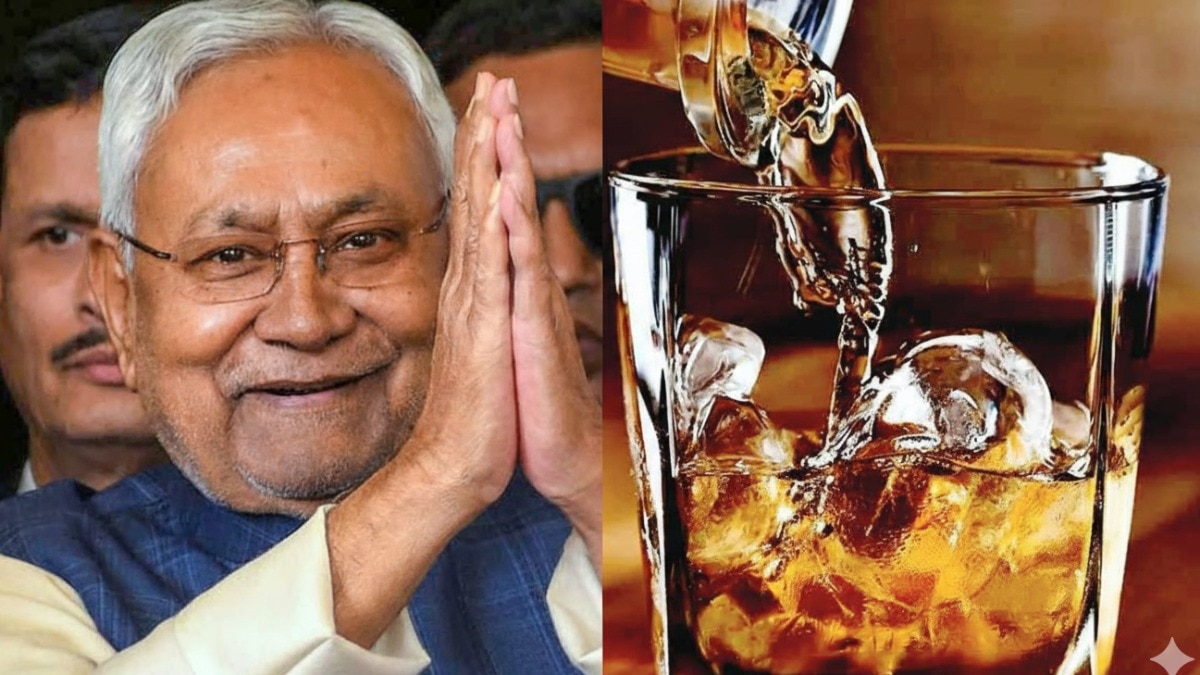
Liquor prohibition in Bihar has entered its tenth year. When the Bihar government implemented this policy in 2016, many people were worried that it would have a negative impact on the state’s economy, which was already in crisis. However, the government’s argument at that time was that the social benefits of this step would be more significant than the economic loss. Now, a decade later, the big question is whether prohibition has really benefited Bihar?
Excise duty received by the state on liquor Bihar It was a major part of the government’s income. But after the implementation of liquor prohibition, the state suffered a loss of about 1 percent of its Gross State Domestic Product (GSDP). Which was equal to 15 percent of its total tax revenue.
Between 2012-13 and 2015-16, income from state excise duty ranged between 0.8 to 1 percent of GSDP. PRS Legislative Research According to a budget analysis, the government had earned Rs 3,142 crore from excise duty in 2015-16, which came down to just Rs 30 crore in 2016-17. Since then this figure has become almost negligible. In contrast, other states have on average raised revenues of about 1 per cent of their GSDP in 2022–23. Liquor Earned from.
Although Bihar faced revenue shortfall for some time due to prohibition, it had clear positive results at the level of health and social behavior. After the ban was implemented, there was an improvement in the health of men and a decline in cases of emotional and sexual violence against women.
By International Food Policy Research Institute (IFPRI) A report published in The Lancet According to the study, prohibition reduced regular drinking among men, reduced obesity, and reduced cases of mental and sexual violence against women. These findings indicate that Bihar’s prohibition policy had positive effects at the social and family levels despite economic losses.
The report also states that after the implementation of prohibition in Bihar, there was a reduction of about 24 lakh cases of daily or weekly alcohol consumption among men, about 18 lakh cases of obesity, and about 21 lakh cases of domestic violence among women.
According to research, alcohol consumption has a deep impact on the quality of marital life. National Family Health Survey (NFHS-5) According to the data, 83 percent of married women in Bihar reported that they had to face physical or emotional violence when their husbands often drank alcohol. At the same time, among those whose husbands did not drink alcohol, this percentage was only 34 percent – that is, the difference is more than two and a half times. It is clear from these figures that prohibition has had a concrete positive impact on women’s safety and family stability.
Prohibition in Bihar has had a positive impact on domestic violence and men’s health, which was better than neighboring states. From 2015-16 to 2019-21, violence against women during pregnancy decreased by 2 percent in Bihar. In comparison, it decreased by only 0.7 percent in Uttar Pradesh and 1.5 percent in West Bengal.
Talking about men’s health, the number of high blood pressure among men aged 15-49 years increased by only 1.8 percent in Bihar, while it increased by 10.9 percent in Uttar Pradesh and 4 percent in West Bengal. Among men complaining of diabetes, there was a 0.1 percent decline in Bihar, while there was an increase of 0.4 and 0.7 percent in Uttar Pradesh and West Bengal respectively. It is clear from these figures that prohibition had a positive impact on the health of men and safety of women in Bihar.
This example shows that policies to control excessive drinking are necessary; although prohibition may cause economic harm, it is still important to take into account its social and health benefits when evaluating its impact.
—- End —-
