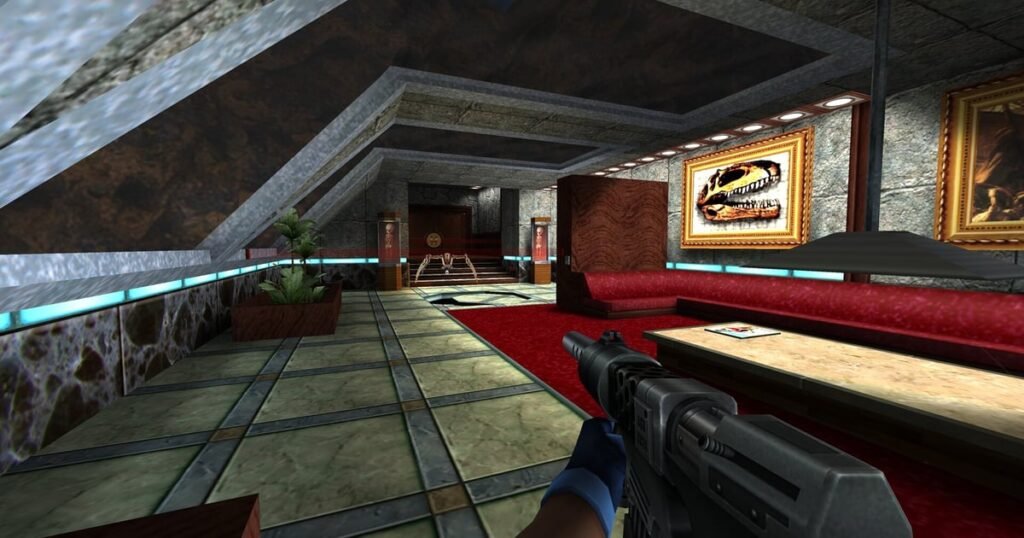
Recreation trade professionals have each motive to leap on the phrase “acquisition” in 2026. After a barrage of main roll-ups and mergers from 2020 by way of 2022, the crushing layoffs which have taken place on the firms that went on excessive spending sprees loom massive over each new high-profile transaction. Atari was one such firm—however to this point it is prevented any such cuts, and has continued its spending spree by way of 2026.
These have not been low-cost purchases both. Atari’s slate of acquired firms embrace organizations like Crossy Highway developer Hipster Whale, MobyGames, Digital Eclipse, and Nightdive Studios, every transaction going for anyplace from $1 million to $40 million, with different transactions and investments nonetheless in movement. Up to now these monetary strikes seem to be paying off—and in line with Nightdive CEO Stephen Kick, it is partly as a result of Atari has executed little to muck with its enterprise mannequin of remastering and remaking basic video games.
Chatting with GameDeveloper.com at PAX West 2026, Kick defined that life below Atari has been going “very well,” and that the corporate has efficiently eliminated sure logistical limitations like payroll administration, tax duties, and different operational duties that are not “recreation improvement centric.”
His constructive outlook is a uncommon one to come across of late, given the aforementioned disasters which have befallen many bought recreation studios. As CEO he is definitely able to be biased about his firm’s state of affairs, however he made a compelling case to again up his level.
At Nightdive, Kick and his colleagues delve by way of the wreckage of long-gone recreation studios in quest of supply code, property, and documentation to deliver these video games again to life. And in finding out these doomed studios, he is observed a constant sample. Firms that order newly-acquired groups to vary their practices or alter them to suit growing traits, are usually those closing these studios years later.
Kick pointed to numerous high-profile publishers responsible of this apply—however his greatest instance, Digital Arts, proved to be a well timed decide.
Digital Arts is a case research for Kick’s studio administration principle
Weeks after our dialog with Kick, Digital Arts made headlines by shutting down Mass Impact and Dragon Age developer BioWare, one of many writer’s most beloved subsidiaries. However earlier than BioWare (which EA acquired in 2007), firms like Bullfrog Productions, Westwood Studios, and Mythic Leisure suffered an analogous destiny. Kick defined that they and different studios struggled post-acquisition due to meddling by their new homeowners.
“These are firms that had been on the forefront of making these wonderful, diversified experiences from title to title, and doing no matter it was they felt creatively fulfilled by,” he stated. “They received acquired after which instantly it is ‘you possibly can’t try this anymore, you are going to work on this one factor.'”
Former EA workers have long shared Kick’s point of view, and even BioWare matches this sample as a result of regardless of its 19-year run below EA. Former workers have claimed the writer’s starvation for dwell service income collided with the studio’s strengths at making single-player role-playing video games.
In keeping with Kick, Atari’s choice to not intervene with Nightdive’s enterprise mannequin is an trade outlier. “When a triple-A or first-party writer sees a staff with lots of potential and success, they typically exit, they purchase them, and [don’t] allow them to proceed to do what made them profitable within the first place,” he stated. “They tried to suit that sq. peg right into a spherical gap inside their system.”
He added that this apply could be a “disservice” to the acquired studios, saying they need to be “allowed to stretch their artistic muscle tissue and do what it was they loved doing, as a result of that is the place their success comes from.”
Nightdive’s evolution exhibits how rewarding studio strengths can play off
Kick acknowledged that for big firms, it may be dangerous to let studios keep of their current lane if they are not returning monetary dividends. However he has lived expertise to again up his declare—Atari’s technique, he stated, has been to let Nightdive and different subsidiaries like Digital Eclipse and Implicit Conversions play to their respective strengths. Now, due to the sheer passage of time, Nightdive’s viewers now consists of followers of contemporary titles that take direct inspiration from the video games it remasters.
Kick described this phenomenon as the results of an “ecosystem” that places their basic titles in the identical market section as fashionable video games and genres impressed by the classics. He praised the writer New Blood’s funding within the “boomer shooter” style, which launched a brand new era of gamers to the first-person shooter aesthetic and gameplay of titles like SiN Reloaded and Blood: Recent Provide.
Simply scroll down on the Steam web page for Blood and you will see suggestions for video games like Ultrakill and the Warhammer Boltgun sequence—each love letters to older first-person shooters.
” I feel that basically helped solidify this neighborhood of people who needed to play video games like [those],” he stated. “They supply the brand new experiences in that enviornment, and we deliver again the outdated ones that impressed it. It is this complimentary cycle of ‘here is a recreation that you just most likely heard of however might by no means play, after which here is a brand new one that’s clearly impressed by that.'”
Atari’s technique will not work for each firm, however Kick’s clarification for a way Nightdive has fared below its steering exhibits how firms can take a long-term view of their freshly-acquired studios. Even when they do not sustain with evolving traits, their output can stay invaluable as viewers style shifts and what was as soon as drained and off turns into contemporary and revitalized.