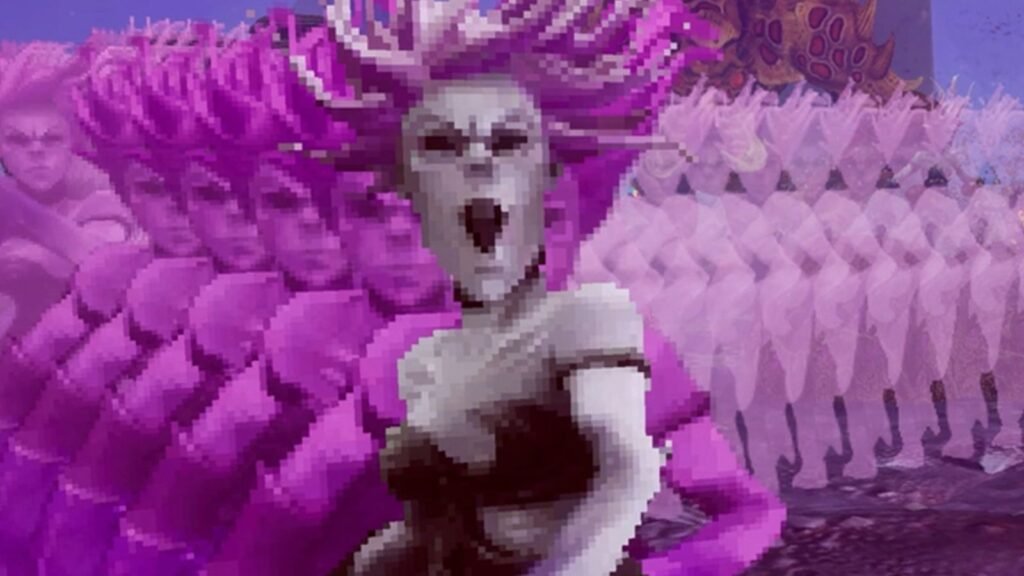
“Nothing says polished retro graphics like good crisp pixels being blasted throughout the display screen at an accelerated tempo.” That is how Mark Chambers, Lead Artist at Auroch Digital, sums up the enchantment of Warhammer 40,000: Boltgun 2, and it is onerous to argue when you see the sport in movement.
This sequel picks up immediately the place the unique Boltgun left off. This time you’ll be able to play as Ultramarine Sternguard Veteran Malum Caedo or the swifter, flame-wielding Sister of Battle Nyra Veyrath, preventing by means of a branching marketing campaign that stretches from the towering heights of a hive metropolis to the dense mangrove swamps of a jungle world. Anticipate new weapons, new places and new foes, together with the bloodthirsty Bloodletters and their daemonic Juggernauts.
For artists, the true draw is the way it all appears. Boltgun 2 is a ‘boomer shooter‘, however its sprites are removed from hand-placed relics of the Nineties. Characters start life as 3D models, are captured from eight digital camera instructions, and are then transformed into sprite sheets full of regular, ambient occlusion and emission information, earlier than being projected onto billboarded planes within the sport world.
It is a intelligent balancing act: crisp, chunky pixels on the floor, trendy rendering beneath, and the sprawling element of the Warhammer 40,000 universe squeezed into silhouettes that learn immediately at velocity. I spoke to Chambers about how the crew pulled it off, and the place retro game art limitations finish and trendy polish begins.
Warhammer 40,000: Boltgun 2 is out now for PC, PlayStation 5 and Xbox Collection X|S (with a Nintendo Switch 2 model nonetheless to return).

Artistic Bloq: How do you make pixel artwork really feel authentically retro with out being constrained by the expertise of the previous?
Mark Chambers: Pixel artwork at its finest does loads with little or no, which was definitely the case within the instances of boomer shooters. Working inside these confines resulted in a novel artwork type, and we captured that look by utilizing crisp, uniformly spaced pixels, exhibiting an genuine, unfiltered model of our sprites however with the added bonus of a bit of recent sharpening and polish.

CB: The place do you draw the road between retro limitations and trendy visible element?
MC: Contemplating that shader expertise has developed vastly from what it as soon as was, we needed to be very cautious with how we utilized trendy strategies. Issues like reflection, liquid and transparency are used sparingly in order to not lose the retro really feel.
CB: How do you translate Warhammer’s extremely detailed characters, weapons and environments into readable pixel artwork?
MC: Warhammer 40k options characters with appreciable quantities of element. One of many challenges we confronted when creating enemies for Boltgun 2 was changing issues down right into a pixel artwork format whereas nonetheless making them recognisable at decrease resolutions.
The first step is sourcing good references. We’re within the distinctive state of affairs of working with an IP that has numerous superb examples of idea artwork and established designs, so we’re in a position to decide and select candidates from a wide array. We search for issues like recognisable shapes and powerful silhouettes that might learn properly to gamers in-game.
Our animation type makes use of the identical concepts of fashion over realism, and poses and gestures are sometimes exaggerated to promote robust, recognisable silhouettes. We additionally purposely scale back the variety of frames to incorporate solely an important angles, which can be a pleasant callback to how characters had been animated again within the day.

CB: Do you begin with detailed 3D fashions or ideas and scale back them down, or construct the pixel artwork from scratch?
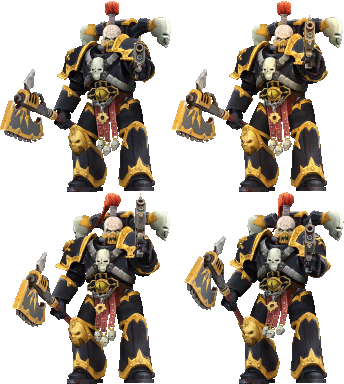
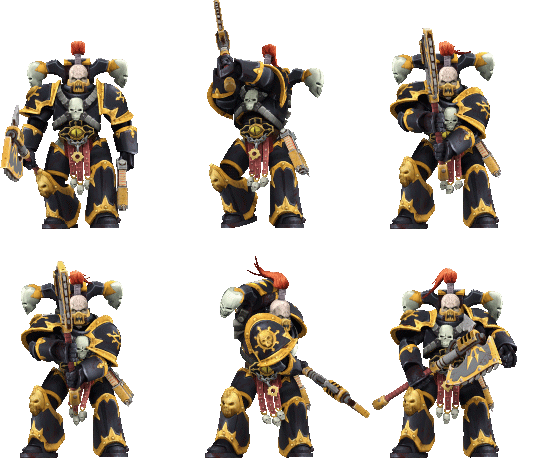
MC: We start by constructing 3D fashions after which the method of pixelisation happens. We use a customized rendering setup that captures belongings from 8 x digital camera instructions, and a script converts the output to a compressed second sprite sheet composed of a number of totally different supplies (unfold throughout a lot of channels).
As a remaining step, our rendered character will get projected onto a billboarding aircraft for gamers to marvel and blast away at.

CB: How do you determine which particulars survive the journey from a full-resolution design to pixels?
MC: We use a reasonably comparable workflow to traditional sport artwork pipelines, and we attempt to emphasise elements like weaponry, armour element and pores and skin patterns. Something that is too excessive intimately is transformed into an impression of the item quite than an correct portrayal (stuff like chainmail, hair, and many others.), which might find yourself wanting too noisy.
Particular decision settings allow us to seek out the correct steadiness of pixels, and enemies typically have customized settings that seize precisely the correct amount of element.

CB: What position do trendy lighting, particles and visible results play in sustaining the retro look?
MC: We use Regular and AO maps to mirror floor element and primarily ‘faux’ the look of 3d onto second sprites (a key element within the look of our sport). Glowing emission and reflection masks can be found too, and we even have one thing known as an SDF layer that allows cool standing results and overlays the place wanted.
CB: How do you utilize chunky pixels alongside trendy rendering with out the 2 kinds preventing one another?
MC: We use a ‘hand-painted’ method to artificially bump values like shadows and lighting (often known as Ambient Occlusion), which helps with the readability of belongings in-game.
A favorite method is making use of edge highlights to essentially make fashions ‘pop’. Our portray type in all probability shares loads in frequent with how real-world Warhammer 40,000 fashions are painted (with the additional advantage of CTRL Z)
CB: What makes pixel artwork nonetheless work for contemporary gamers past the nostalgia issue?
MC: Pixel artwork is a formidable medium which requires a number of effort and ability. Nothing says polished retro graphics like good, crisp pixels being blasted throughout the display screen at an accelerated tempo, and there is an enchantment to video games that lean extra into robust visible kinds over realism. A world of ‘3d pixels’ offers us that aesthetic, and the idea may be utilized to nice impact.
CB: Has working in pixel artwork modified the way in which you design characters, environments or results for Boltgun 2?
MC: We have labored onerous to develop a pipeline that captures the thought of a ‘polished retro’ boomer shooter, particularly for characters. There have been many challenges concerned within the course of, from exploring how finest to make use of pixel artwork in a 3D setting to balancing efficiency, translating excessive ranges of Warhammer 40,000 element, and making certain a constant look throughout all areas of the sport.

CB: What are you able to do with pixel artwork at the moment that merely wasn’t doable when the video games that impressed Boltgun 2 had been made?
MC: Fashionable Render engines give us the pliability to shortly experiment with totally different pixel resolutions with the intention to discover that candy spot of consistency, whereas nonetheless wanting retro. Again within the day, artists needed to ‘bake’ pixels in by hand, guarantee every thing was balanced, and manually make modifications if wanted. There’s additionally the huge good thing about with the ability to seize sprites from 3D fashions now.
Consoles to play Warhammer 40,000: Boltgun 2 on:

Sony
PlayStation 5 (Slim) – 1TB SSD, Contains Wi-fi Controller

Xbox
Xbox Collection X – 1TB SSD, Contains Wi-fi Controller
