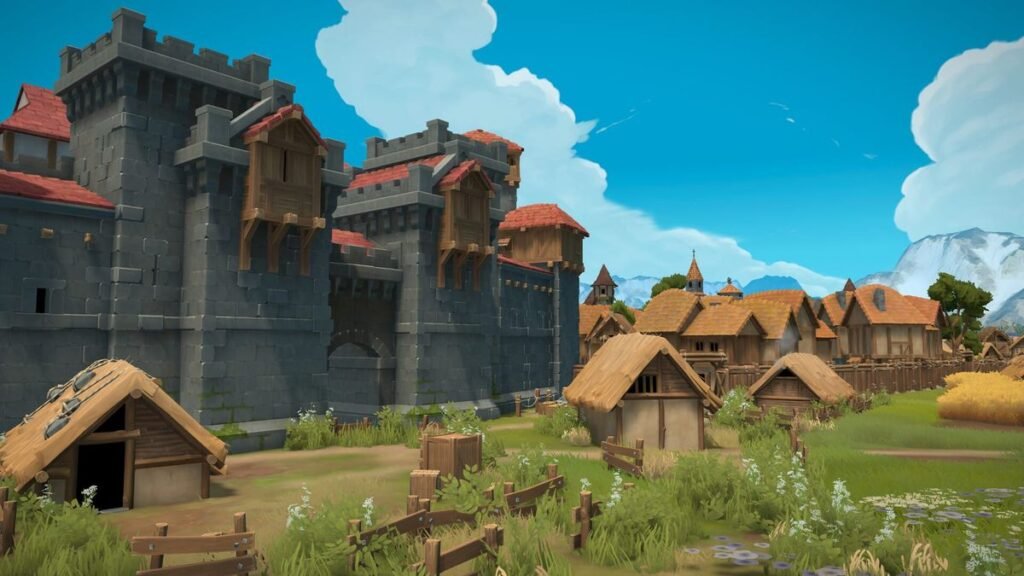
At their core, metropolis builders characterize a straightforward to know fantasy: What if you got final energy to manage the place you and your entire family members reside in? Are you able to do a greater job than the folks at present operating your metropolis? One of the best video games within the style problem that fantasy additional, asking robust questions on commerce offs, priorities, the pure world, and extra.
Like in city planning, the stress between chaos, management, and the town may be very a lot current in metropolis builders. These video games are additionally removed from the one style of gaming to include cities; simply in current a long time, video games like Management, Prototype and Notorious have all requested us to rethink our relationship with structure and the town system. However metropolis builders are, for apparent causes, the style of video games that the majority issues itself with concepts of how cities are run. Whereas actual world city planning and metropolis constructing has developed to just accept the position of friction and battle in metropolis life, only a few metropolis builders view these concepts as positives.
The battle and friction inherent to metropolis life can usually be seen as intimidating and even downright terrifying for non-city dwellers. However for these of us who’ve lived in these cities for all of our lives, they’re the purpose. There’s potential in cities as a result of they power us to come across different methods of life, variations of language, delicacies, trend, and extra. That is supported by principle and analysis as nicely. In his foundational (get it) guide The Makes use of of Dysfunction, famend metropolis planner and urbanist Richard Sennet wrote that “the jungle of the town, its vastness and loneliness, has a constructive human worth. Certainly, I feel sure sorts of dysfunction have to be elevated in metropolis life.” In response to Sennet, dysfunction, chaos, and friction in metropolis life are web positives; cities encourage freedom as a result of they cut back management, encouraging folks to come across alternative ways of life and settle for others.
Sennet comes from a serious faculty in city planning, one which contradicted extra conventional approaches and sought to foster friction and emergent programs as a substitute of controlling and repressing them. This faculty of thought rose to prominence within the Sixties. One in every of its most well-known and in style examples is The Demise and Lifetime of Nice American Cities by Jane Jacobs, printed in 1961. To summarize what’s a really lengthy (and fascinating) work, Jacobs argued for organized complexity: Cities operate like dwelling ecosystems somewhat than easy machines, which means planners should research how folks truly use areas from the bottom up and construct cities round this complexity and even for this complexity.
Like dwelling ecosystems, cities are more healthy when borders and limits are fluid, two-way, and loosely outlined, permitting folks to be challenged and to discover. That is in stark distinction to the sooner, modernist approaches to city planning that view a metropolis as an unruly association of objects that require top-down planning and management. In that view, citizen motion have to be funneled into simple to see and shut routes, zoning should restrict interplay between the courses, and “undesirables” have to be relegated to metropolis boundaries (probably the most well-known instance of that is Baron Haussmann’s devastating and brutal reforms of Paris and its banlieues, which affect that harsh and delightful metropolis to this present day).
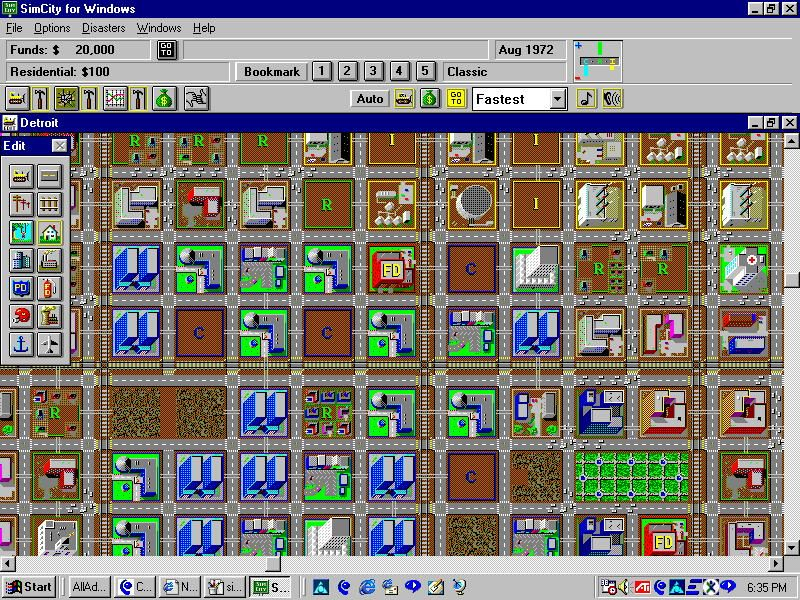
Each approaches to city design will be seen in metropolis builders, however the earlier, modernist method is way extra dominant. Maybe the very best instance of how metropolis builders undertake this top-down method into their gameplay is probably the most well-known metropolis builder of all time: Sim Metropolis. As Noah Caldwell-Gervais shows, Sim Metropolis belonged to an early style of laptop video games that attempted to attraction to the individuals who already owned private computer systems: businessmen. These had been folks for whom balancing ledgers of numbers was enjoyable (I say snidely whereas hiding my Victoria 3 save information). Thus, the sport was targeted on administration, on the shepherding of assets for development. This, naturally, creates a metropolis whose complete function is to develop, to generate varied sources of revenue, and achieve this nicely. Briefly, the purpose of Sim Metropolis is to create a nicely ordered metropolis, a metropolis which runs easily and effectively.
Chaos has nothing to do with such a metropolis and positively has no constructive position to play. This is the reason when later iterations of the sport, which tried to have broader shopper attraction, launched chaos within the type of pure and fewer pure disasters (like alien abductions), they did in order a form of joke. Summoning tornadoes and aliens to destroy the cities I toiled over is one in every of my favourite reminiscences from my early days of gaming, nevertheless it wasn’t something critical. Chaos was exterior to the town: damaging, arbitrary, merciless, and humorous.
In some ways, metropolis builders largely operate with these identical modernist and somewhat outdated assumptions at their core at this time. The fundamental gameplay purpose of the style remains to be to create an ordered, functioning, environment friendly metropolis, the place chaos, friction, and happenstance are minimized. Among the most profitable metropolis builders at present on Steam–Cities: Skylines (each titles), Planet Zoo, The Farthest Frontier, Timberborn, and Factorio–all require the participant to try to construct ordered, environment friendly, and well-functioning cities or manufacturing programs. A few of them permit for chaos and dysfunction; Cities: Skylines, in its try to mannequin “actual” cities, undoubtedly means that you can construct sprawling, chaotic cities. However this isn’t inspired: Cities equivalent to which are allowed however are penalized by the sport utilizing its visitors, abandonment, and repair attain programs. Cities which the sport deems “inefficient” will find yourself with stranded rubbish truck drivers and complete components of the town deserted.
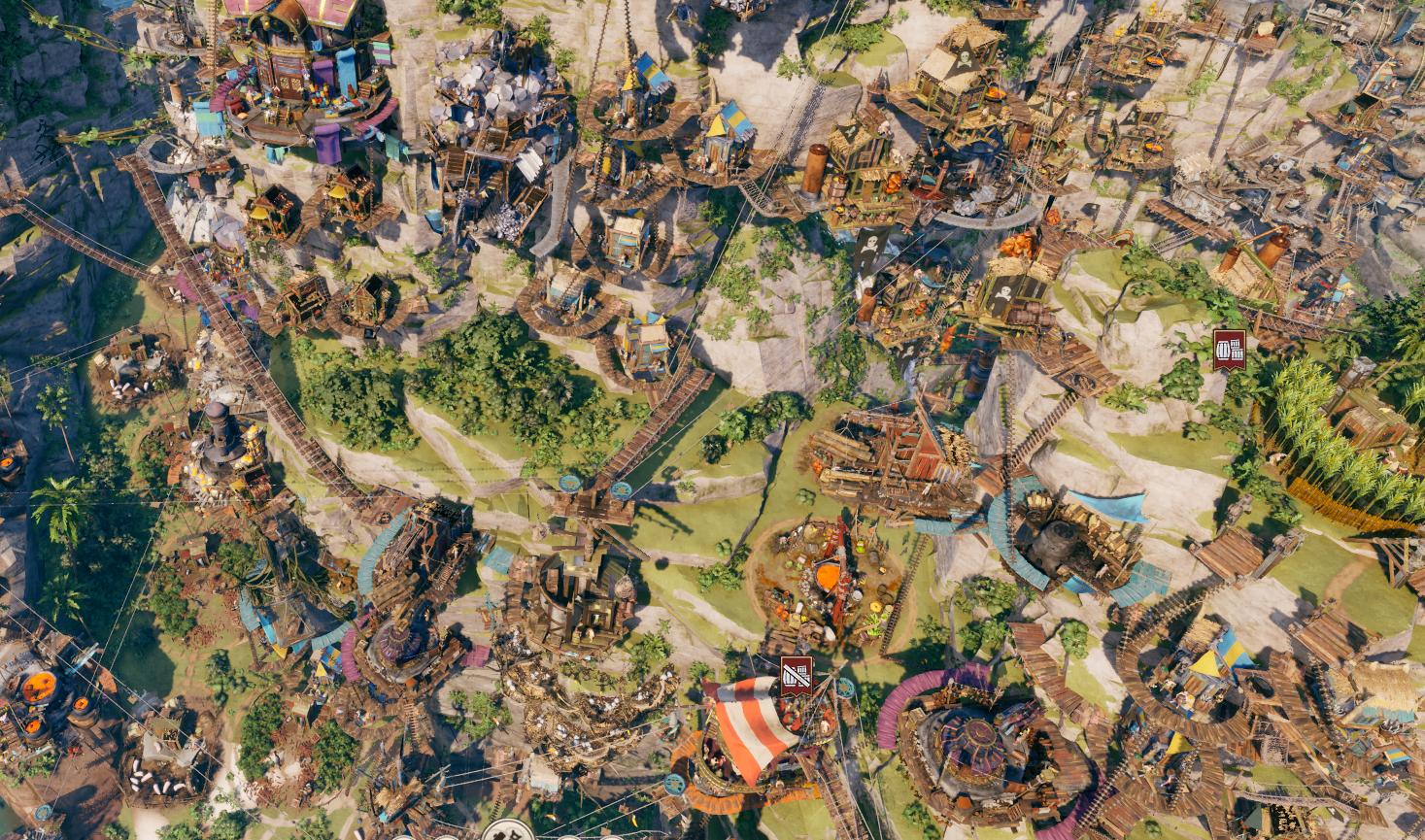
Two counter examples will serve to explain what metropolis builders seem like once they incorporate the opposite, extra fluid faculty of thought in city planning: Corsair Cove (2026) and Basis (2025). In Corsair Cove, the participant leads a crew of grizzled pirates as they construct a secret cove away from the prying eyes of the Spanish navy. Half of the sport is centered round constructing stated cove, with manufacturing chains turning into ever extra complicated as you need to construct increasingly more elaborate and succesful ships. The opposite half entails sending these ships out on increasingly more harmful and profitable quests. However right here’s the key sauce that makes Corsair Cove stand out: The sport provides a vertical axis to its map. Since you are in a cove, land is scarce and so it’s essential to construct up. To attach your buildings it’s essential to construct a system of elevators, pulleys, foot bridges, and stairs, wrapping round haphazardly-placed foundries, galleys, housing, and factories. In fact the sport deliberately will get in your manner, dispersing assets in all three instructions, forcing you to make compromises and construct a very convoluted and chaotic settlement.
If you are considerably penalized for constructing buildings far-off from one another or for putting buildings in a disorderly trend, there isn’t a alternative however to take action. Plus, the sport enables you to take away these penalties fairly simply, by creating the sport’s tech tree and including higher ropes, pulleys, and superior elevators. Corsair Cove’s core assumption is that the top results of your constructing will likely be a large number; there isn’t a different approach to construct the settlement. Even for those who, for some ungodly motive, strove to construct an organized and environment friendly cove, it could disintegrate in your palms as you realized that oh crap, the turtles you want on your turtle soup (the useful resource which most beguiled me throughout my playthrough) are all the best way over there and also you need15 bridges simply to get near them.
Chaos shouldn’t be some exterior power that occurs to your settlement; it’s an inherent a part of how the town must be constructed, and making an attempt to struggle it’s pure delusion. And what’s extra, it form of works ultimately. God is aware of how; by the point my playthrough of Corsair Cove ended, I used to be laborious pressed to clarify the entire manufacturing chains and the way they labored. However they labored, even when I didn’t have a exact, incisive, and controlling diagram to point out it.
Basis is rather more refined. Centered round constructing a bustling medieval city, Basis makes you relinquish management of a really fundamental mechanic in metropolis builders: You don’t get to place down roads. Roads in metropolis builders are maybe probably the most baffling try to implement order on a metropolis. I doubt that anybody studying this thinks that the roads resulting in and from their metropolis or the roads inside their metropolis make any form of sense. Roads are some of the natural, chaotic, and laborious to manage components of cities, notoriously simple to bungle, painful and expensive to rebuild, and stubbornly conforming to some demonic algorithm. And but, most metropolis builders start with the participant paving an ordered grid, dissecting a virginal piece of land into neat plots that may then be used for distinct and orderly manufacturing, related by environment friendly transportation. When has any metropolis been constructed that manner? By no means, says Basis, and introduces a way more chaotic, and due to this fact pleasing and reasonable various the place folks put down roads the place they want them.
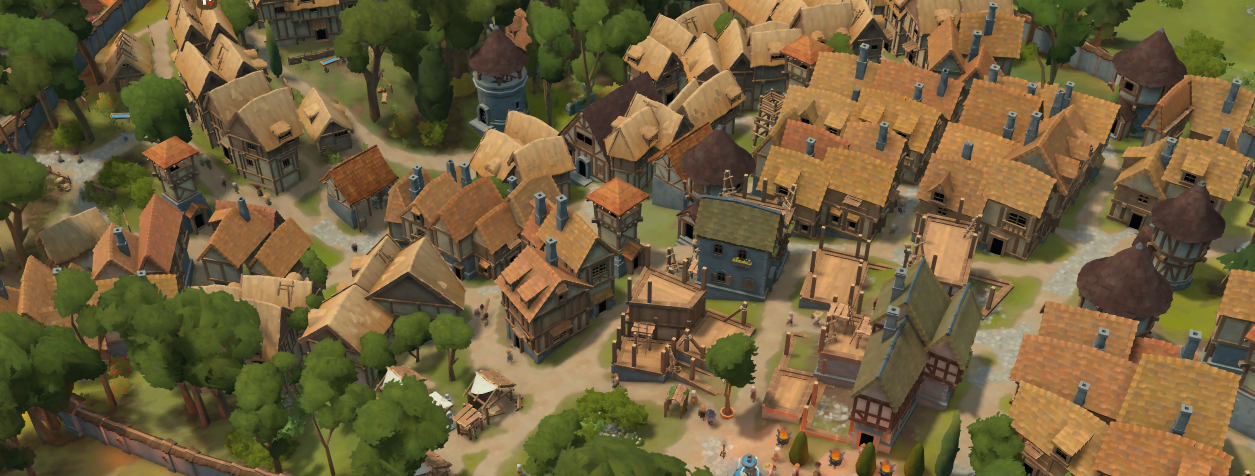
The result’s one thing lots much less intense than Corsair Cove, which some would possibly even name “cozy.” Basis feels good to play as a result of the town grows round your actions somewhat than from your actions, which resonates significantly better with how we expertise the cities we truly reside in.
Past creating higher and extra reasonable photographs of how cities truly are, each video games profit from their inclusion of chaos on a gameplay stage. They really feel much less irritating than the old fashioned video games and their restricted creativeness, and even smoother: By letting friction in, by embracing it as one thing that’s inevitable, they wrestle much less in opposition to it. Just like the willow that bends earlier than the storm, Basis and Corsair Cove spend a lot much less power than different metropolis builders on planning, saving and loading, making errors, getting pissed off, and obscure programs. As an alternative, they invite the participant to let unfastened and construct freely, inside well-defined confines however with out limiting their hand an excessive amount of. This resonates deeply with the participant and feels proper, making the video games extra enjoyable to play.
In any case, when was the final time anybody confirmed as much as direct something in your metropolis? When have you ever ever laid eyes on a perfectly-behaving grid? And, on the flipside, what number of instances have you ever seen new paths or makes use of for public house spring forth from the wants of the individuals who reside round you? That is the key failure of the modernist method to city planning: Actual cities have simply by no means behaved this manner.
Chaos and friction are generative forces in how cities develop, reside, and prosper. We are able to see it and really feel it for ourselves, with out studying any guide. Fostering and enabling these energies in our real-life cities is difficult sufficient, a multi-generational wrestle in opposition to capital and the forces of “order” who wish to put the city in neat, exploitable little containers. We shouldn’t should struggle the identical struggle in video games. As an alternative, metropolis builders ought to embrace their potential to create new future imaginaries, new visions for cities and let a little bit (or lots) of chaos again into them.